
Cold Water Extractor vs. Hot Water Extractor: Which One Should You Use?
1-1-2026:
Choosing the right carpet extractor can make a noticeable difference in cleaning results, equipment longevity, and overall operating costs. While both cold water and hot water extractors serve the same core purpose—removing soil, stains, and contaminants from carpet—they each bring unique strengths and limitations. Understanding these differences helps cleaning crews and facility managers select the right tool for the job.
In short, cold water extractors remain a popular choice for many commercial cleaning operations, especially those focused on cost efficiency and routine maintenance.
Advantages of Cold Water Extraction
• Lower operating cost
Cold water extractors eliminate the need for heating elements, reducing both energy consumption and long‑term maintenance expenses. This saves money for cleaning companies and crews.
• Ideal for wool carpets
Wool carpets—common in high‑end office complexes—are prone to shrinkage when exposed to heat. Cold water extraction avoids this risk entirely.
• Protects carpet dyes
Without heat, there is minimal risk of fading or altering carpet dyes, making cold water a safer option for delicate or richly colored carpets.
• Comparable cleaning power when chemicals are used
When paired with the right cleaning agents, cold water extractors can remove dirt just as effectively as hot water systems in many everyday situations.
• Better for protein‑based stains
Certain stains—such as milk, eggs, or blood—respond better to cold water because heat can cause proteins to set into fibers.
• Fewer mechanical failures
No heating unit means one less component to burn out, repair, or replace.
• Effective for routine soil removal
For normal stains and general carpet dirt, cold water performs reliably. Much like washing dishes, cold water works fine for regular cleaning tasks.
Challenges of Cold Water Extraction
• Less effective on stubborn, deep‑set stains
Without heat, breaking down heavy soils or oily residues becomes more difficult
Hot Water Extractors
Hot water extractors—often referred to as “steam cleaners” even though they use hot water, not steam—are the go‑to choice for deep cleaning and heavy soil removal.
Advantages of Hot Water Extraction
• Superior removal of chemical residues
Hot water helps dissolve and flush out excess cleaning solutions more effectively.
• Better performance on deep, non‑protein stains
Heat breaks down oils, greases, and embedded soils, making it easier to lift stubborn contamination.
• On rare occasions its a better choice for those stubborn stains
When carpets have heavy buildup or deeply embedded dirt, hot water extraction is the recommended method.
Challenges of Hot Water Extraction
• Risk of carpet shrinkage
Heat can cause certain carpet materials—especially wool—to contract.
• Potential for dye fading
High temperatures may affect the stability of some carpet dyes.
Which Extractor Should You Choose?
The decision ultimately depends on the carpet type, the level of soiling, and the cleaning goals:
• For routine cleaning, wool carpets, or dye‑sensitive materials:
A cold water extractor is the safer, more economical choice that will get the job done 95% of the time.
• For deep cleaning stubborn stains that you could encounter occasionally: A hot water extractor would be reccomended.
Many professional cleaning companies use both systems strategically, selecting the right extractor based on the specific job.
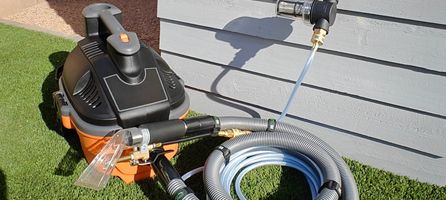
Hi Detail’s DIY Shop Vacuum Extractor Conversion Kit transforms your existing shop vacuum into a powerful upholstery and carpet cleaner—letting you deep‑clean your car interior, home carpets, drapes, couches, and other fabrics at a fraction of the cost of a dedicated extractor machine, while delivering the same professional‑grade results.